Identify the minerals, the basics
Among the most frequent problems that arise at every step in collecting, those relating to the correct identification of the specimens are undoubtedly the first to be solved.
Doubts appear already during the research carried out on the spot, as soon as we have the 'still hot' piece in hand: what will these black-brownish crystallines that accompany beryllium are? And what about those white rayed needles nestled in the lavas of Sicily?
On this page we will try to give you some suggestions to more easily recognize minerals.
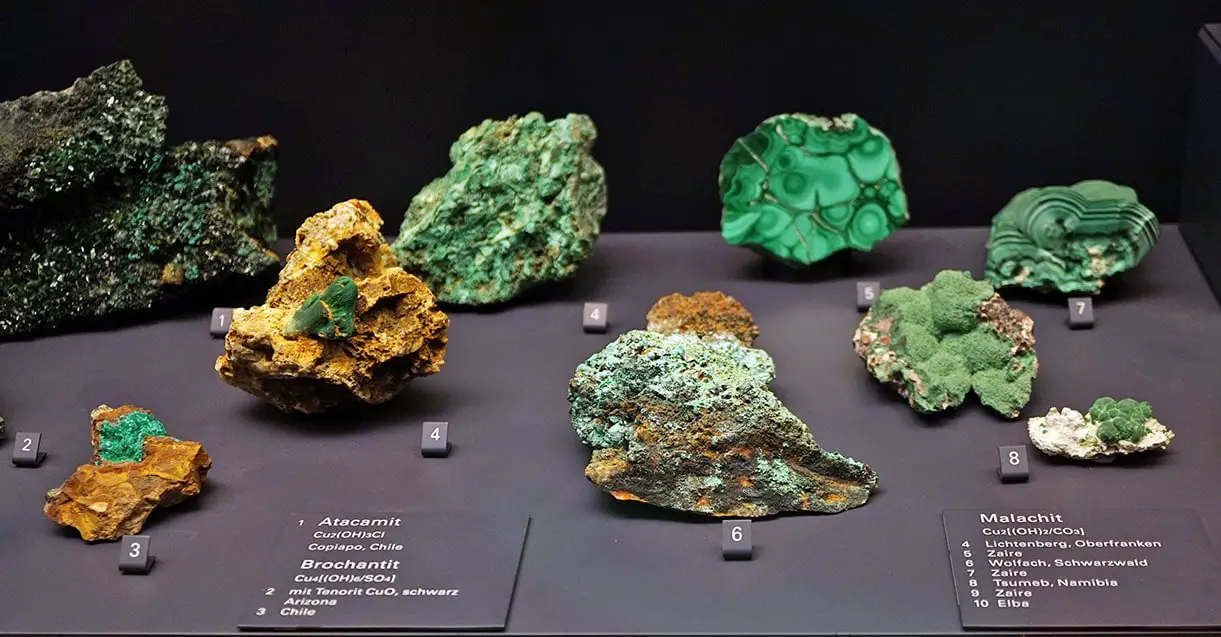 minerals
Initially help can be provided by more experienced friends, but soon we will find ourselves obliged to find other ways to solve our problems and to prepare, consequently, a series of 'strategic stages' , which over time will lead us to a good ability to recognize a good number of species and to recognize the rarest ones.
The first step is certainly to get a good bibliographic documentation : in fact you cannot recognize minerals if you do not consult texts that describe this information with illustrations coloured.
Equally important are the general mineralogy texts , in which the chemical and physical properties of minerals are illustrated, in which you can also get suggestions for excursions, or information on the presence and appearance of interesting minerals.
 minerals book
Although a valid bibliography, even if rich in color illustrations, is not always sufficient to resolve any doubts about the exact identification of the various specimens in our collection: thus the colorless apatite that they assured us come from the Aurina Valley shows a suspicious similarity with hyaline quartz, the radiated natrolite from Vicenza looks just like aragonite.
To avoid misinterpretation of this type, a possible solution is to directly observe a large number of samples already classified, which are generally found in the collections of more experienced friends or, better still, in museums.
Visit to the museum
While the fact that all museum-owned minerals have been analyzed is not true, it is certain that at least those on display to the public have undergone more careful scrutiny and are therefore useful as a comparison.
Furthermore, observing the specimens live, even if behind glass, gives the possibility to check their mineralogical association and the rocky matrix, essential hinges for formulating a sure judgment.
But where are these great public collections located? In Italy there are several that deserve to be visited, although they very rarely reach the size of the corresponding European institutions.
Among them, some belong to universities, others to local authorities, still others to schools or individuals.
In any university there is a science or engineering faculty, there will be a mineralogical sector, equipped with more or less developed collections and scientific instrumentation for the analysis and identification of samples.
The largest state collection of minerals is located at the La Sapienza University of Rome , where there is a museum rich in over 30,000 specimens , many of which are exhibited in large showcases.
In addition to minerals, it also has a collection of meteorites that can be considered the most complete in our country.
An accurate exploration can be done in the Mineralogical Museum of the University of Florence , recently equipped with a large series of large well crystallized specimens: it is famous, among other things, a topaz that weighs 150 kg.
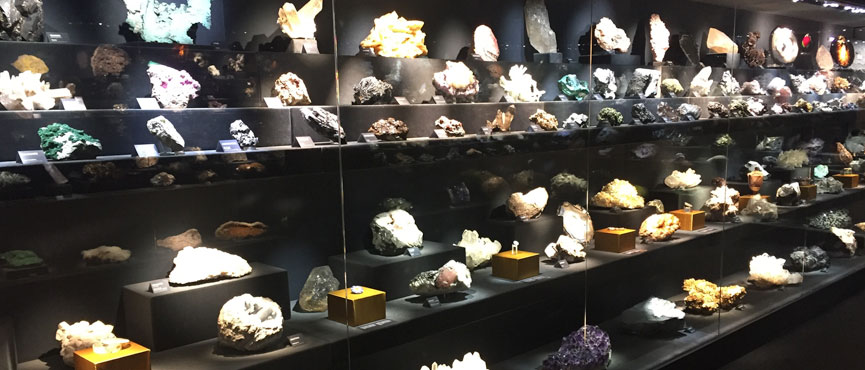 Florence museum
Among the museums owned by local authorities, the Civic Museum of Natural History of Milan occupies an important place for the ancient mineralogical tradition.
Inside this museum there is a large collection of Italian minerals: as many as 20,000 of the 32,000 specimens possessed come from local deposits.
Foreign mineralogical museums
We continue to talk about museums, very useful institutions that allow us to enrich our mineralogical knowledge.
After dwelling on the Italian ones, it is good to extend our gaze to Europe and the American continent.
The opportunities to travel, in fact, are today much more frequent than in the past and therefore it is good to take advantage of them.
The reference institution for systematic mineralogy in Europe is the Natural History Museum .
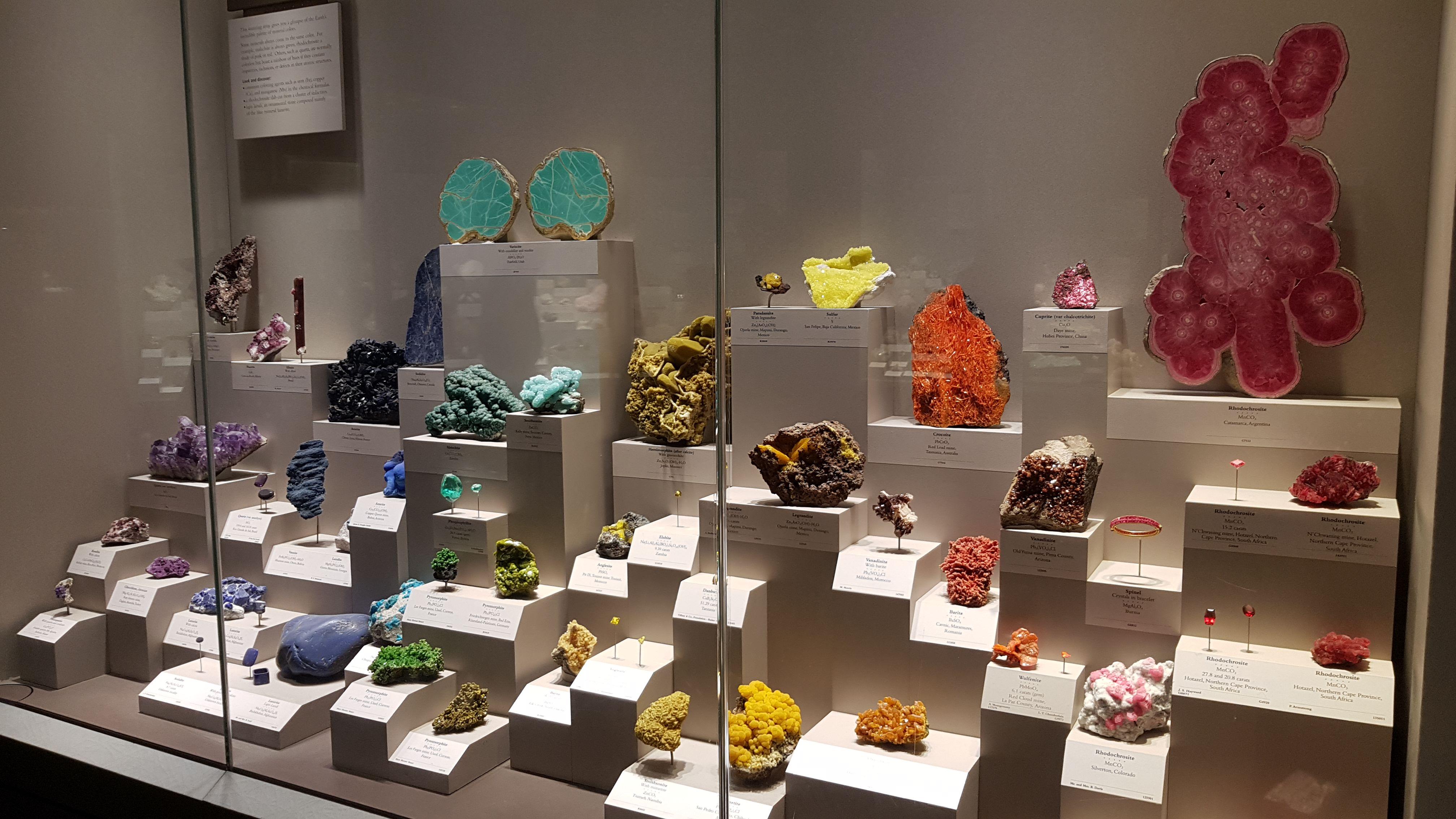 London Museum
Now that even the existing Geological Museum is an integral part of it, the mineralogical and gemological collections found there are in themselves sufficient to justify, for the connoisseur, a visit to London.
In addition to the 7000 specimens of the descriptive collection, you can admire the superb samples of the mines of Cornwall, Cumberland and Scotland, as well as those of the Commonwealth territories.
Starting from London, therefore, it would be better to continue to Paris; in the French capital, in fact, there are at least three public collections to visit: that of the Sorbonne , that of the Ecole des Mines and that of the Mineralogical Gallery of the National Museum (Jardin des Plantes) .
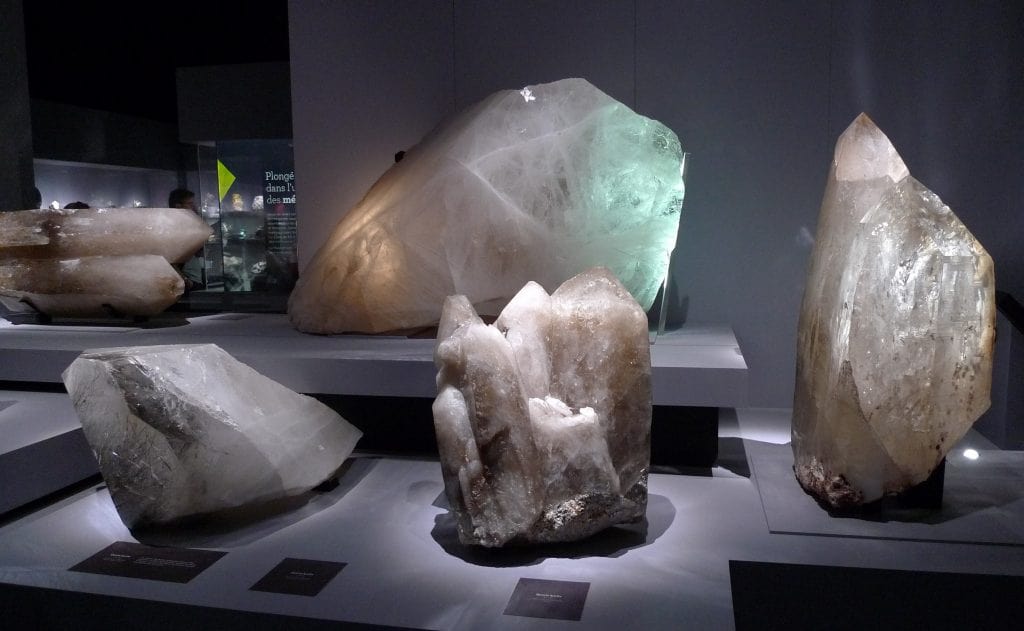 Jardin des Plantes
In this last bicentennial museum, the highlight is represented by the Ilia Deleff collection of giant crystals, arranged with great scenographic care in a special environment.
these crystals, as mentioned, are of impressive size: they are quartz, feldspar, beryl, calcite and tourmaline, all coming from the Brazil .
In addition to this, the crystals used by the great mineralogist Renè-Just Hauy to set up the modern theory of crystalline solids are also preserved here.
Outside the Europe , a large and important collection is the Natural History Museum of the Smithsonian Institution of Washington , in the United States.
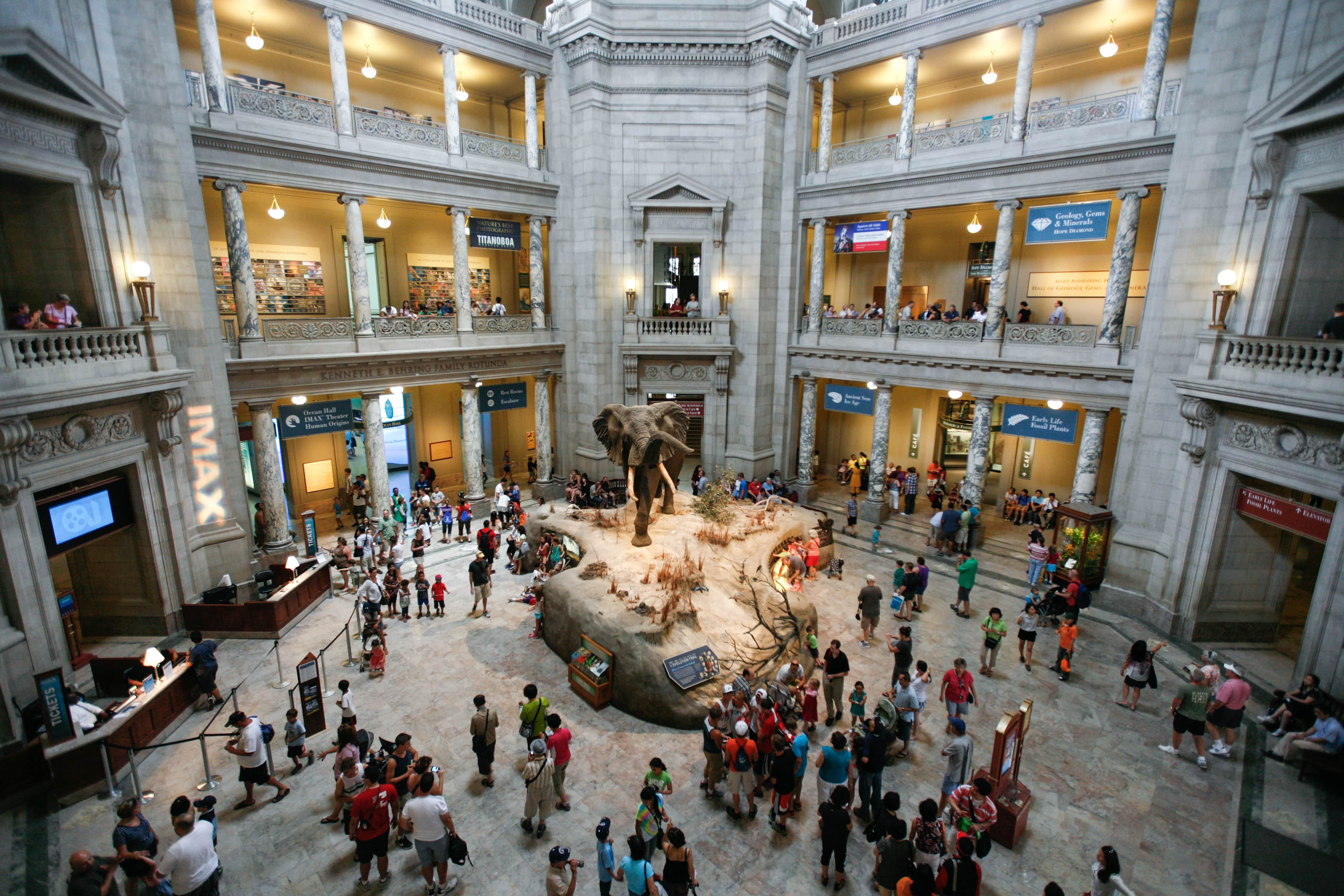 Washington museum
Here is set up the most pleasant public exhibition that exists, both for the beauty of the specimens and for the didactic-illustrative apparatus.
In a well-protected display case, the famous blue Hope diamond is exhibited, which with its almost 45 carats represents a true unicum among the very rare colored diamonds.
But it is in Brazil that there is a museum exclusively dedicated to diamonds; it is located in a city that owes its name to the rich diamond deposits in the area: Diamantia.
Sample analysis, observation skills
In the second half of the eighteenth century a German scholar, AG Werner , developed a method for identifying minerals based on their external characters, that is, regardless of their chemical composition and reticular structure.
He addressed the students of the Mining Academy of Freiberg , in Saxony, above all for practical purposes, but his theories found consensus and application throughout the Europe, so much so that even today, while leaving the field to increasingly precise and sophisticated methods of analysis, they are not to be forgotten, especially by scholars of the Germanic area.
One of the fundamental property to take into consideration is the color of the powder (or 'strip'), which is easily obtained either by grinding the sample, by scratching it with a metal point or, finally, by rubbing it on a non-ceramic tile. vitrified.
Another rather simple property to observe is the cleavage , which manifests itself inside a crystal as a set of smooth and clear fracture planes, arranged in parallel series (topaz) or in multiple angled series (calcite and other carbonates).
Other particular characteristics regarding the magnetism (verifiable by means of a magnet), the radioactivity ( to ascertain it you need a Geiger counter), or the more obvious fractures and gloss .
The observation of the fluorescence with long-wave and short-wave ultraviolet rays is also of considerable interest: in this case, however, it is not possible to identify with absolute certainty all the species, as the same mineral may or may not be fluorescent depending on the location of origin or depending on the generic stage.
Other methods
So far we have given some advice on the first observations and on some simple essays to perform to try to name our minerals unless you blindly trust those who gave them to us.
Leaving aside the more specific analyzes, namely those pertaining to scientific laboratories, there are some other diagnostic methods that the collector can use, even in the home.
One method consist on the density measurement , allows to solve many diagnostic problems.
If a hydrostatic balance cannot be afforded, it is possible to use 'heavy' liquids, whose density is known, which can be diluted in all proportions.
In the case of the hydrostatic balance, the density value is represented by the ratio between the weight in air of the mineral and the difference between the latter and the weight in water, while with heavy liquids it is necessary to prepare a series of solutions of known density and observe in which of them the sample remains in equilibrium position, without sinking or floating.